Personal communication for your child
A personalised language-teaching system for children with speech difficulties and autism spectrum disorder. Build your child's personal communication board with real photos and your own voice — together with a special educator. No internet needed, no ads.
The core communication board is free. Kalbeja Pro is an in-app subscription.
Many children — especially children with autism spectrum disorder — can communicate, but they need an additional, more comfortable way to do it. We don't send your child off with a dictionary in hand — we build their personal communication board together, step by step.
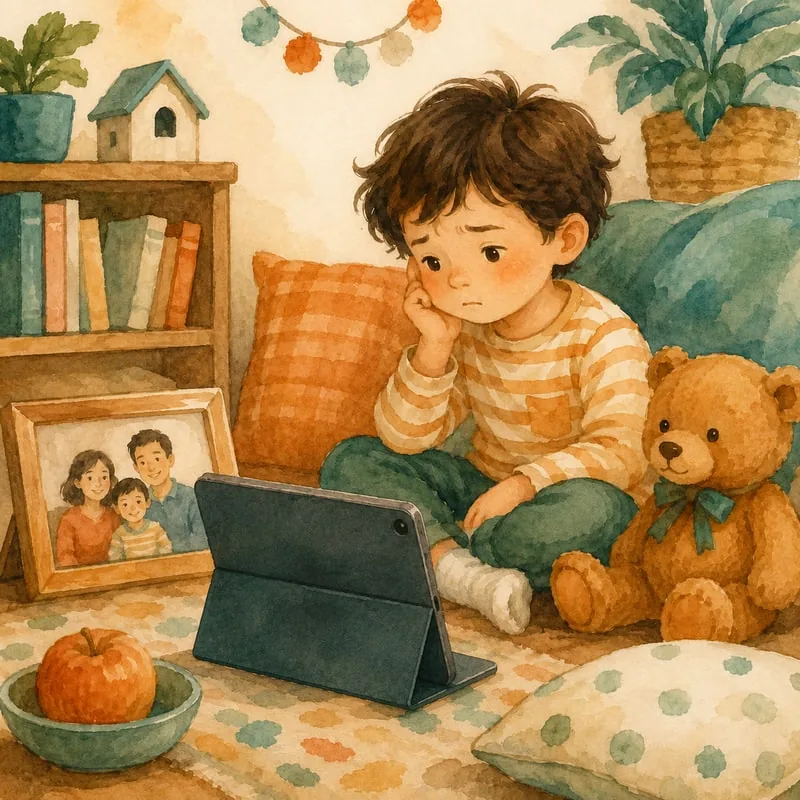
International AAC apps are expensive, in foreign languages, and use generic symbols that have nothing to do with your child's daily life.

Kalbeja lets you photograph your child's real objects, people and places. A familiar world means familiar communication.

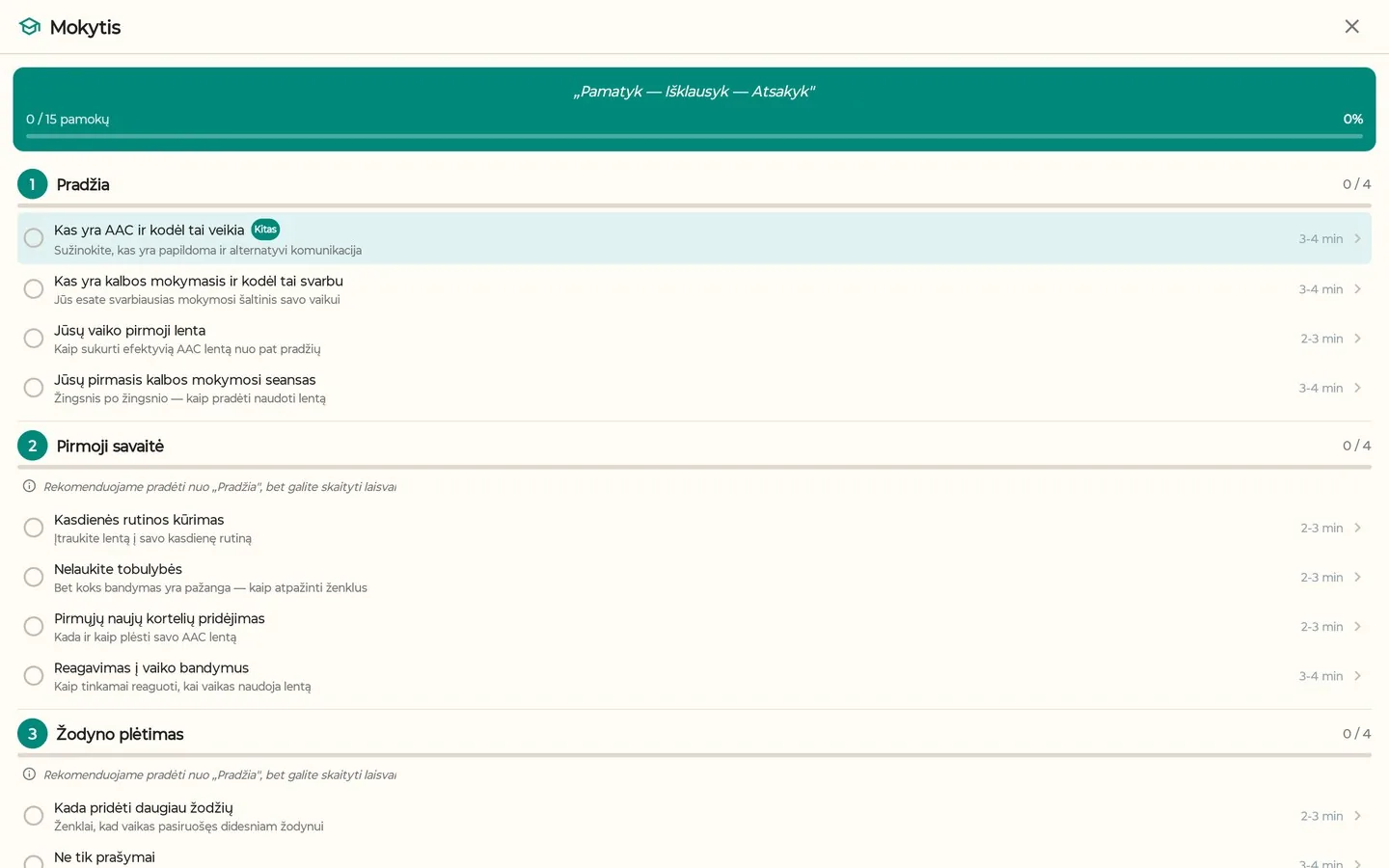
A programme of 18 short lessons gradually shows how to use the app with your child. No special training needed.
Every feature built consistently on the recommendations of special educators and speech and language therapists.
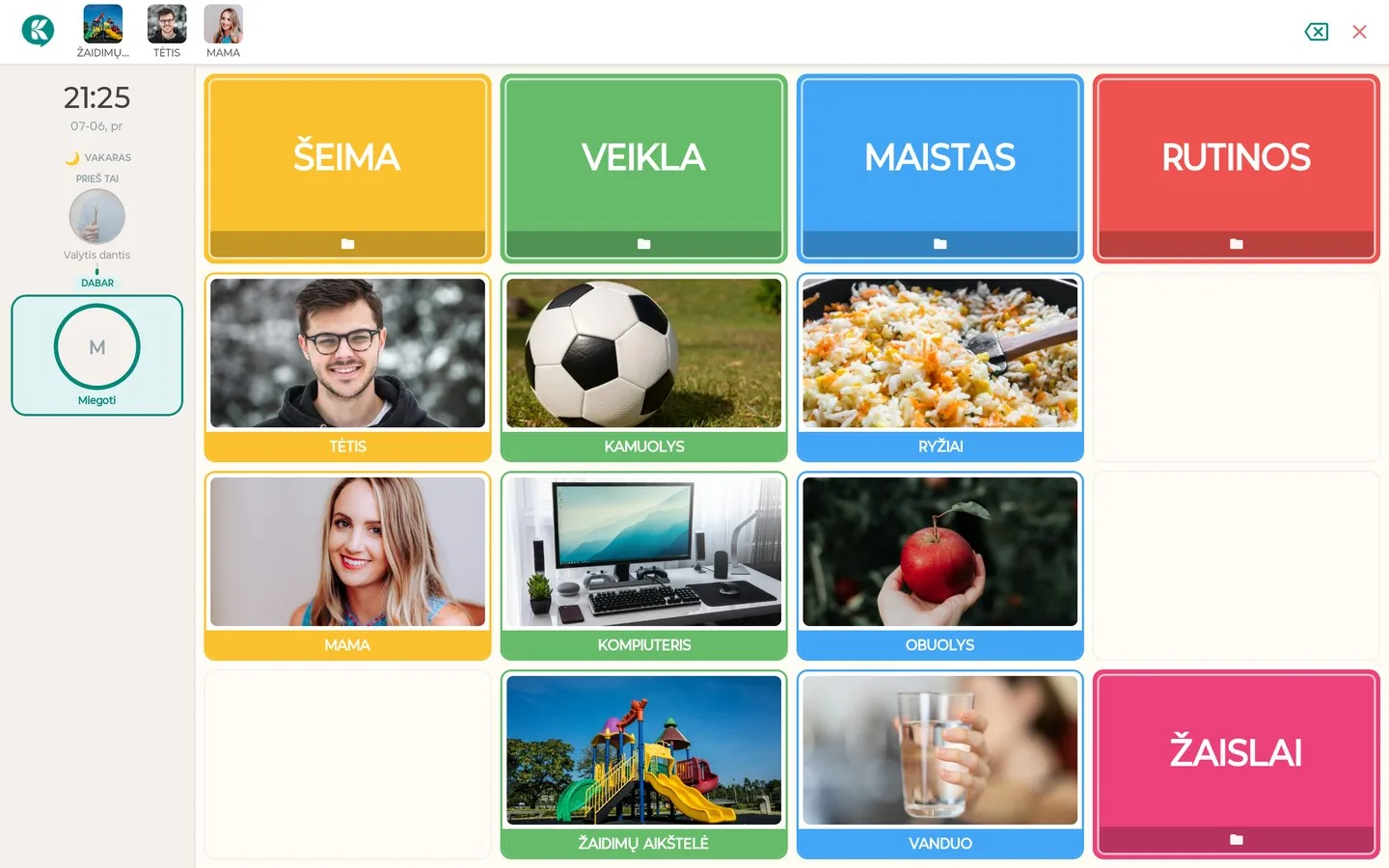
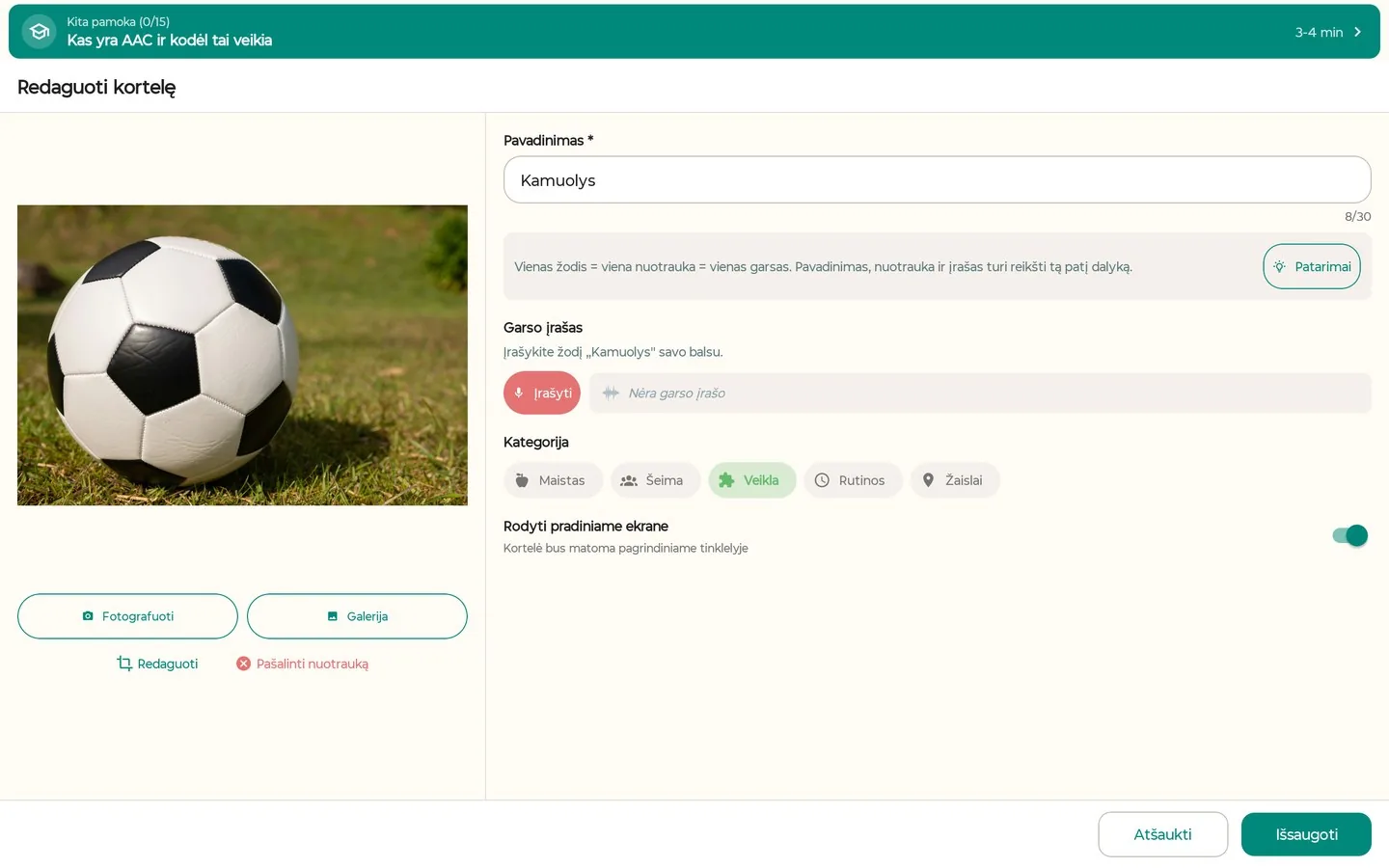
Photograph your child's environment and record the audio in your own voice. The child recognises real objects and hears a familiar voice — not abstract symbols and not a computer's speech.
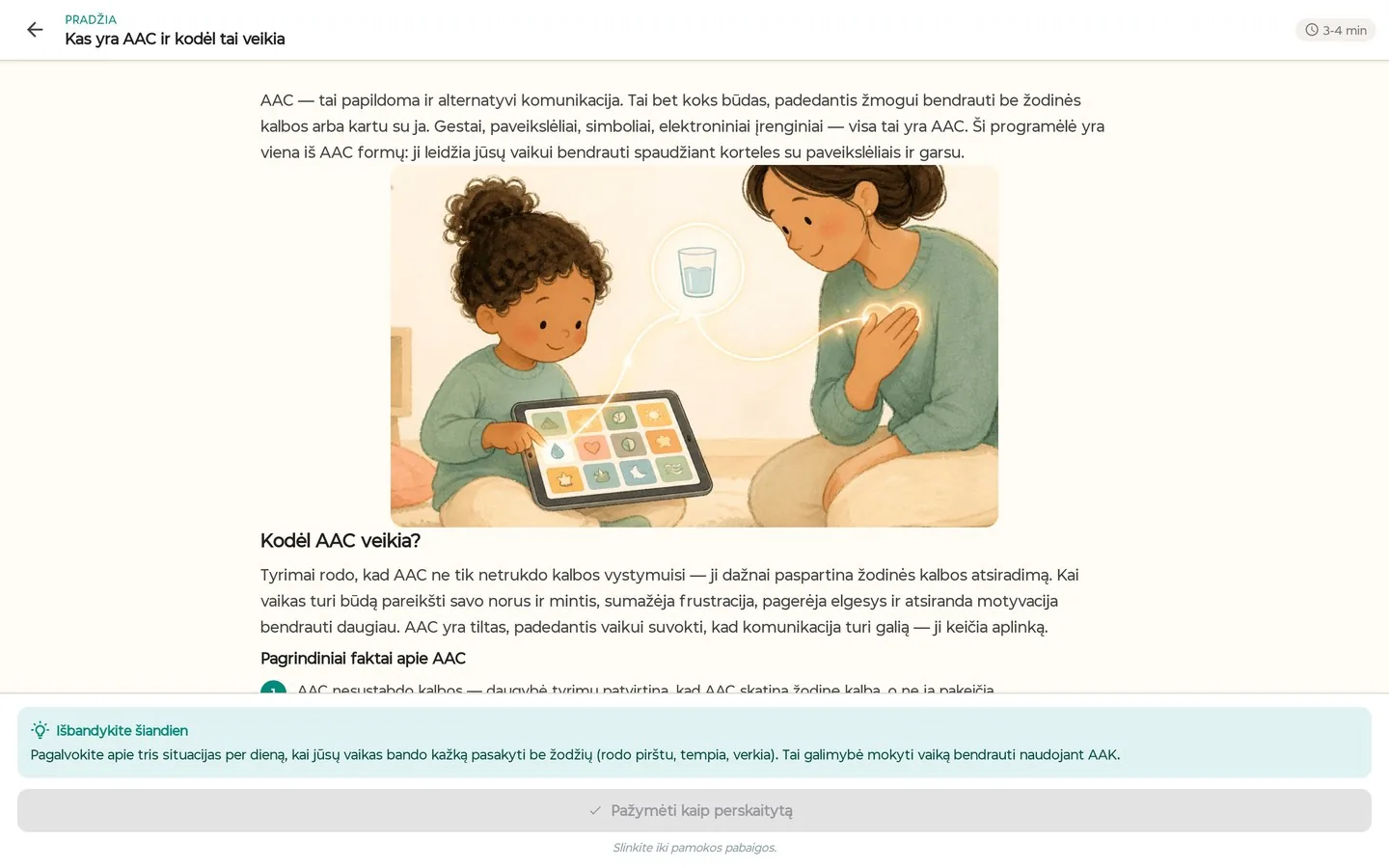
An 18-lesson programme for parents, created with practising special educators and speech and language therapists. It helps bring AAC into the child's daily life, consistently.
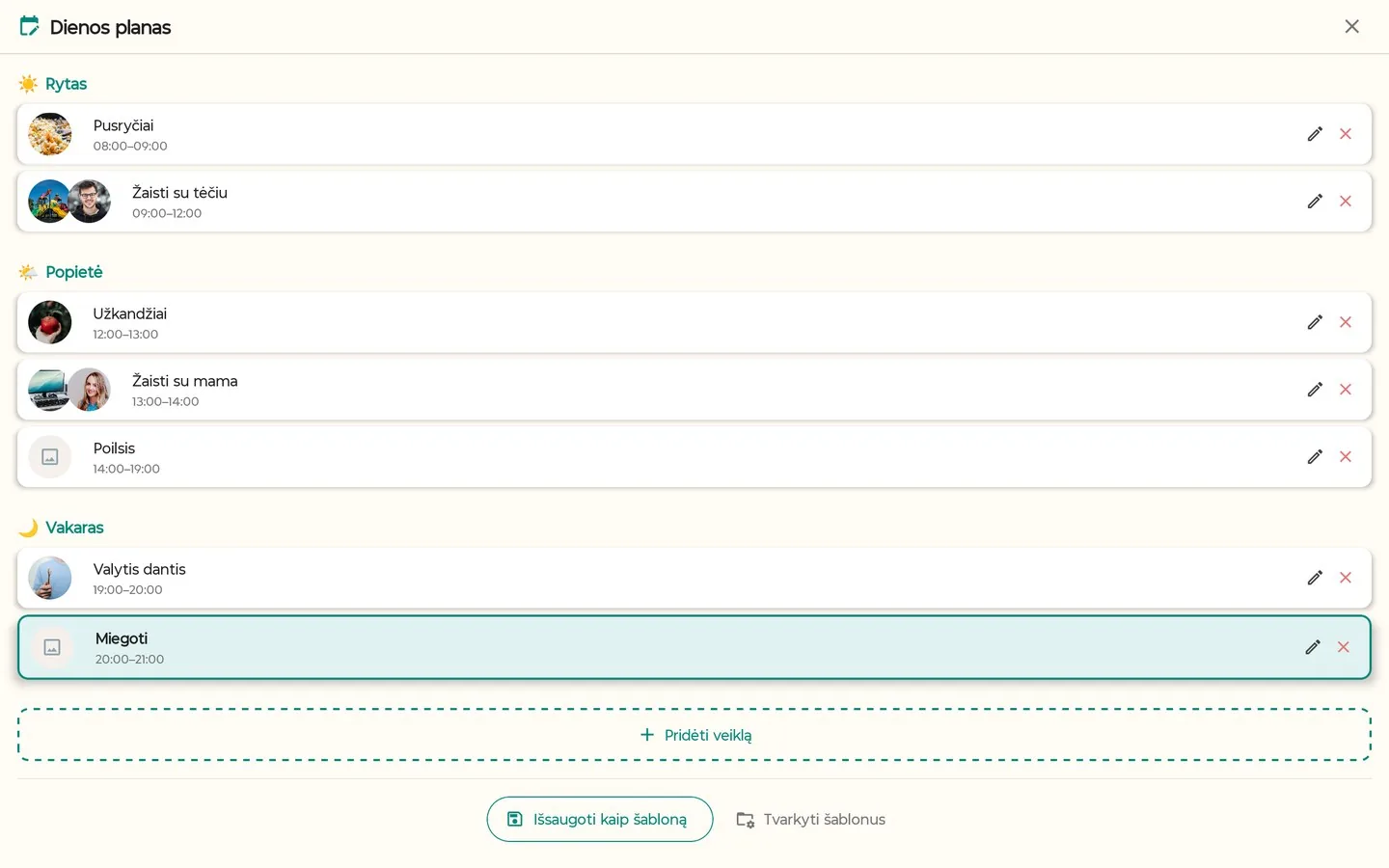
A visual daily routine with photos and time intervals — the child sees what is happening now, what came before and what comes next.
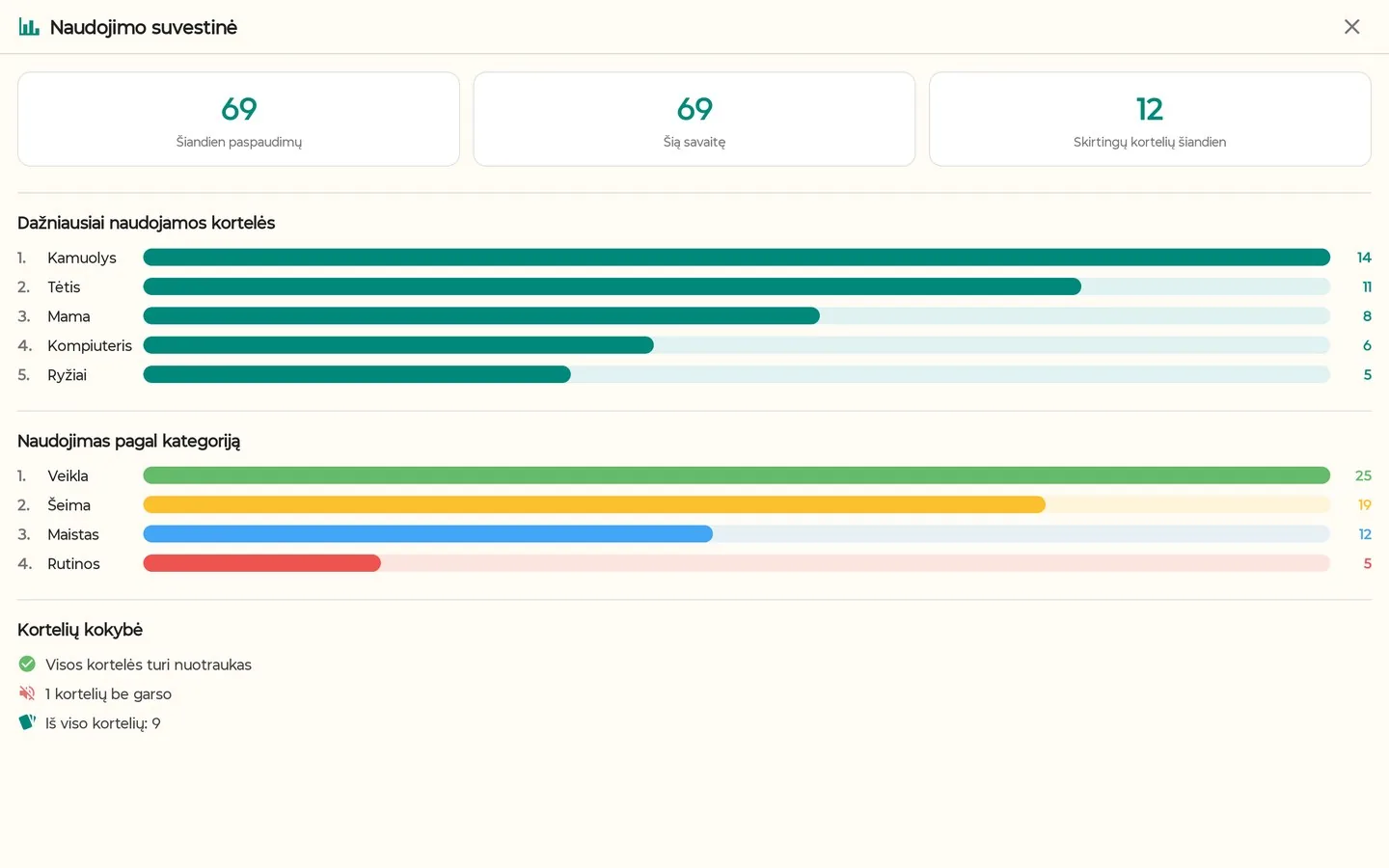
Follow your child's communication progress — which cards are used most, how the vocabulary grows, day-to-day changes.
All cards and sounds are stored on the tablet. No internet needed — the app works anywhere.
Encrypted child data, a PIN-protected parent mode, separate child and parent screens. Nothing is shared with third parties.
Plus all the management tools you need
Within 5–10 minutes your child will have their first cards.
Download from Google Play and create your child's profile in a few minutes.
Photograph objects and record the audio in your own voice — your child gets their own personal cards.
The child taps the cards and hears your voice. You see the progress — gradual, but clear.
Simple, warm, designed for children and parents — real screens from the app on a tablet.
Protected three ways: methodology, privacy, encryption.
The learning programme and communication methodology were developed in collaboration with practising special educators and speech and language therapists.
Your child's data — cards, photos, voice recordings and statistics — is stored only on your device and is never sent to any server. No tracking, no ads.
Child data is protected with SQLCipher encryption and a PIN code. Only parents can change the content.
Before public launch, Kalbeja was used in real life by five families together with a practising special educator.
Our child started combining two symbols on his own — for example, "store" + "ice cream".
He expresses his wants much more precisely now… no more leading us by the hand.
He keeps tapping the symbols and trying to repeat them aloud — new words keep appearing in his vocabulary.
— From a family's written testimonial after the four-week pilot, July 2026. Translated from Lithuanian; published with the family's written consent.
Kalbeja is built by three co-founders in Vilnius, Lithuania.

Product Lead (CEO)
I build Kalbeja out of a genuine conviction that every child deserves to be heard — even if their voice is still forming. My goal is simple: technology steps into the background, while parents, educators and the child's everyday attempts to communicate stay in front. I believe a simple, Lithuanian and private app can do more good than any marketing — which is why Kalbeja is built exactly that way: together with families, step by step.

Educational Lead
For more than a decade I have worked with children with a wide range of speech and communication difficulties — from the search for first words to building everyday communication strategies. Over that time I became convinced of one thing: what matters most is not the tool itself, but how calmly and consistently parents and the child use it together every day. Kalbeja is my chance to make the work I do in my private practice available to many more families.

Technical Lead (CTO)
I'm responsible for the system architecture and the technical decisions behind Kalbeja. I joined because I believe a strong technical foundation is what turns a good idea into a reliable, everyday tool. For many years I built data, calculation and reporting solutions for the largest European banks, where complex processes have to run simply and without errors — which is exactly what a tool used by children, parents and educators needs.
A transparent journey — from completed family testing to public launch and further growth.
In spring, Kalbeja was tested with selected families and a practising special educator. Real feedback from families showed what works and which decisions were worth refining before public launch.
Based on insights from families and the special educator we refined the app: clearer card creation, a more flexible day plan, deeper categories for sentence building, a built-in library of the most common words. Kalbeja has matured for everyday family life.
The app is ready to use — we are running pilot projects with the first educational institutions and taking part in the national educational-technology testbed programme in schools. Institutions wishing to join: write to us. For families the app is available on Google Play.
The app is now available on Google Play for Android tablets. The core communication board is free; Kalbeja Pro is a subscription or an institutional activation code.
Special-educator consultations for the child's first board, boards accessible from several devices, additional card sets, translations into Polish and English. All changes are guided by the real experience of families, special educators and speech and language therapists.
Short answers to the most important questions about AAC and using the Kalbeja app.
AAC — Augmentative and Alternative Communication (in Lithuanian: AAK). These are ways to communicate when spoken language has not yet formed or is limited — for example, using photos, symbols, gestures or a tablet app.
Kalbeja is designed for children who find it hard to communicate with spoken language — especially children with autism spectrum disorder, speech development difficulties or other communication barriers. The app adapts to different ages and abilities: from the search for first words to more complex everyday communication strategies.
Yes, Kalbeja works completely offline. All cards, recorded sounds and the child's data are stored only on your tablet. No internet is needed — you can use the app anywhere: at home, on a trip, at a clinic or outdoors.
Kalbeja is Lithuanian and was created together with a practising special educator in Lithuania. Unlike international AAC apps that use generic symbols and foreign languages, Kalbeja lets you create cards from real photos of your child's environment and record the audio in your own voice. That makes communication more natural, more personal and easier for the child to recognise.
Most importantly — Kalbeja is not just a vocabulary on a tablet. It is a structured language-teaching system: 18 lessons for parents and a personal communication board that you build together, rather than receive ready-made. Typical AAC apps usually hand you a tool and leave you to figure it out on your own. Kalbeja gradually walks the process together with you.
No. The app includes a programme of 18 short lessons for parents, created together with practising special educators and speech and language therapists. The lessons show how to bring AAC into the child's daily life consistently — step by step, without rushing. No professional background is required.
Kalbeja is available on Google Play for Android tablets. The core communication board is free. Kalbeja Pro is an in-app subscription: €29.99 per month, with cheaper 6- and 12-month plans (the longer the plan, the lower the average monthly price). Institutions use activation codes — contact info@kalbeja.com.
We share knowledge about AAC and children's language development — simply and practically.

Long before launch we tested Kalbeja together with families. Five observations parents and educators taught us — and which genuinely changed the app.
Ready-made symbols or cards from your own photos? What research shows, why personal photos are often grasped faster by the child — and when generic symbols still have their place.
Download Kalbeja from Google Play and build your child's board in one evening. No ads, no data shared with third parties.
